
BJJ vs. Karate vs.
Taekwondo.
A modern parent's guide to choosing the right martial art for your child, comparing self-defense realism, bullying response, and how each one actually trains kids.
Every parent researching martial arts for their child eventually lands on the same question: BJJ, karate, or taekwondo? All three build discipline, fitness, and confidence, but they train kids very differently. This guide compares them honestly, on the factors that actually matter to a parent deciding where to enroll their child.
Why this decision is harder than it looks
Karate, taekwondo, and BJJ all promise the same things on a brochure: confidence, discipline, self-defense, fitness. That similarity is exactly what makes choosing hard. The real differences show up in how each art actually trains a child, not in how it's marketed.
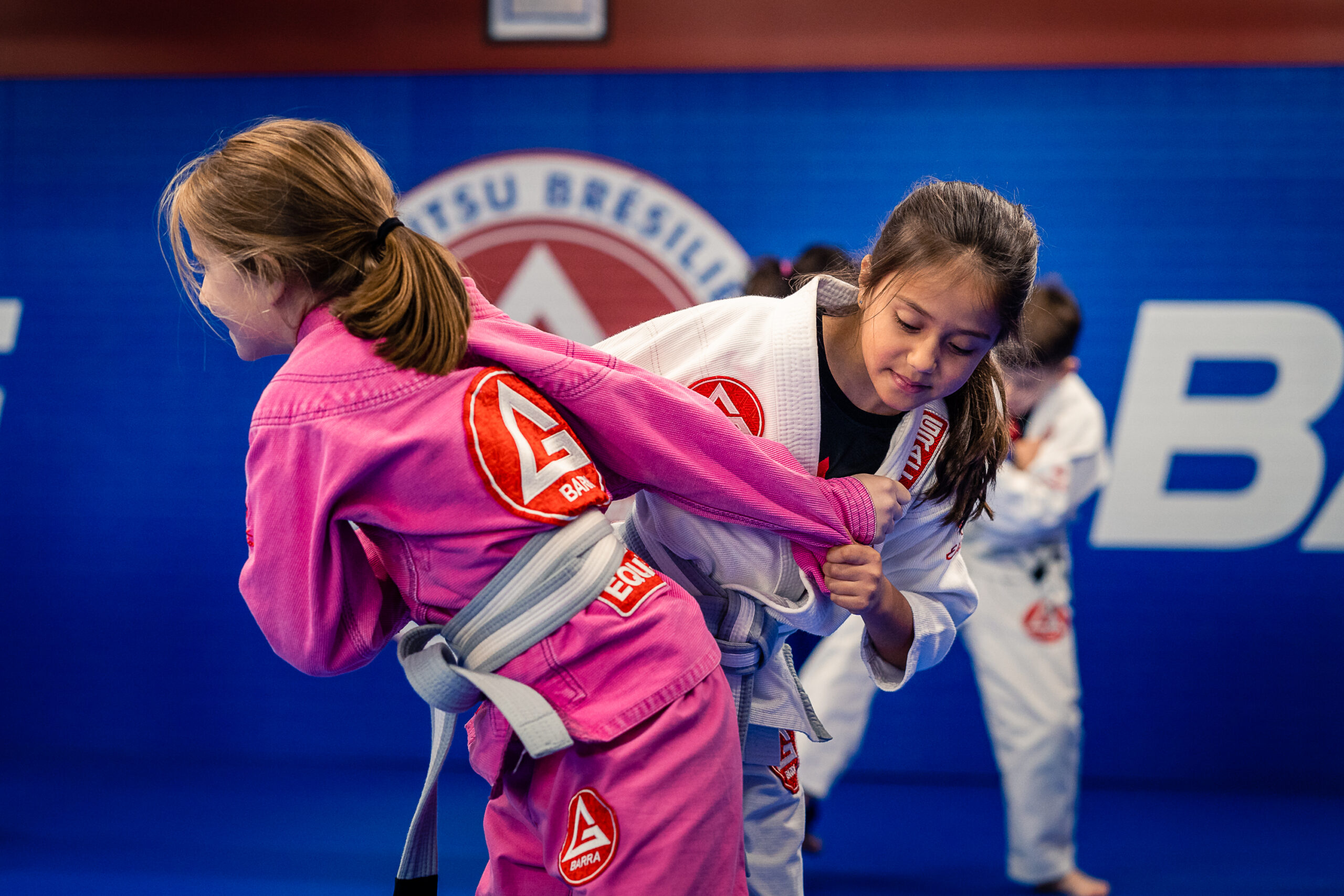
Karate and taekwondo are striking-based arts built around forms (kata or poomsae), point sparring, and structured belt testing. BJJ is a grappling art built around live, resistant practice from day one, where a child learns to control a bigger opponent using leverage instead of strikes. Neither approach is "wrong," but they produce genuinely different skills and genuinely different kids.
Karate vs. Taekwondo vs. BJJ, side by side
Here is how the three compare across the factors parents ask about most, based on how each art is typically taught, and how BJJ is specifically taught in our kids programs at Gracie Barra Saint-Laurent.
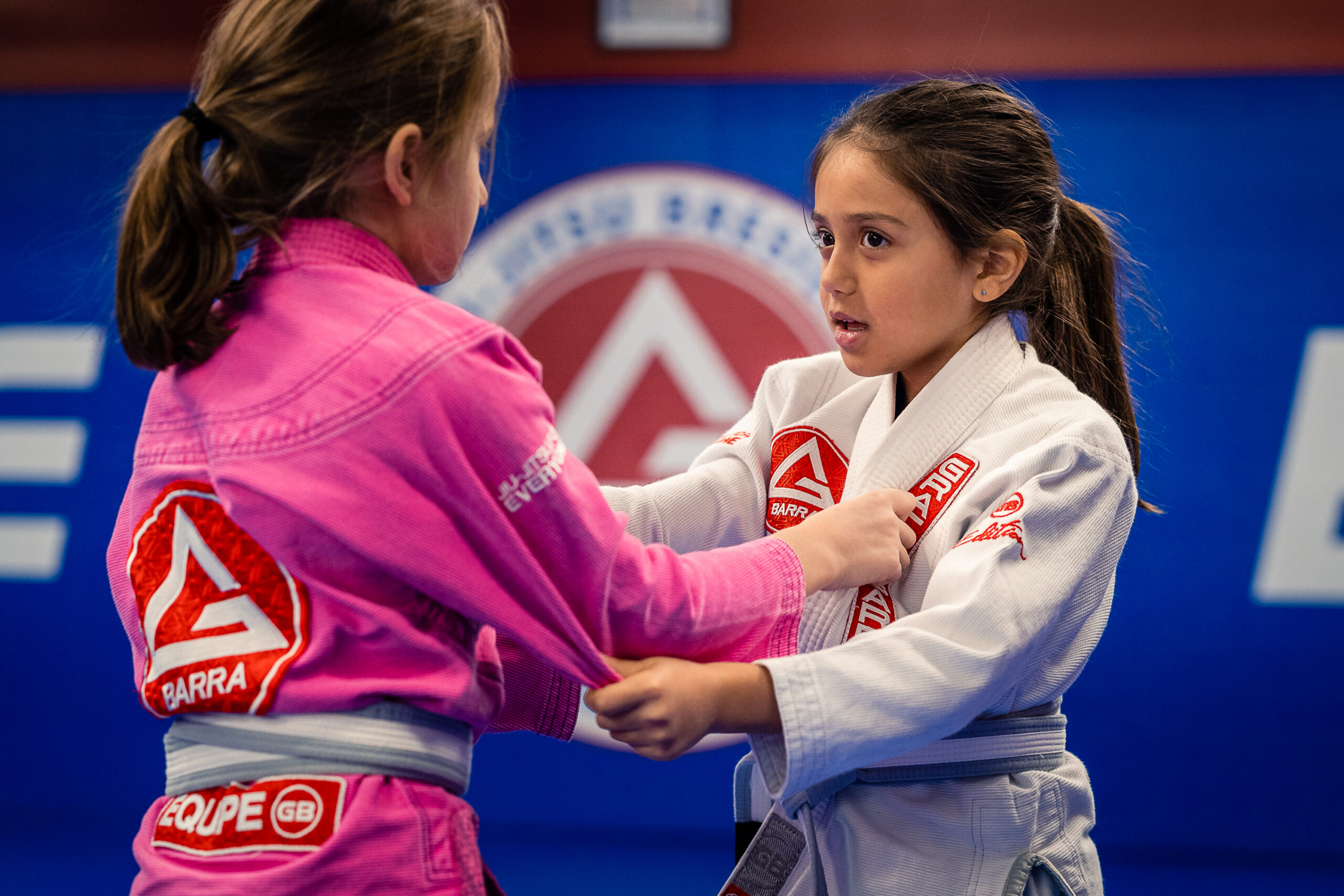
It's worth pausing on that "real contact" row, because it's often overlooked. Many karate and taekwondo programs delay live sparring until a student reaches an upper belt, which can mean months or years of drilling technique before ever testing it against someone actually trying to stop them. BJJ takes the opposite approach from day one: live, resistant practice starts at white belt, scaled to be safe and age-appropriate, but real. That difference is a big part of why BJJ students tend to build genuine, tested confidence earlier, not confidence based on how a technique is supposed to work, but confidence based on having actually made it work.
This is not a case of one art being universally "better." A child who thrives on the structure of frequent belt testing may love karate or taekwondo. A child who needs practical, ground-based confidence for real situations, especially bullying, tends to benefit most from BJJ's live-practice approach.
What karate actually teaches
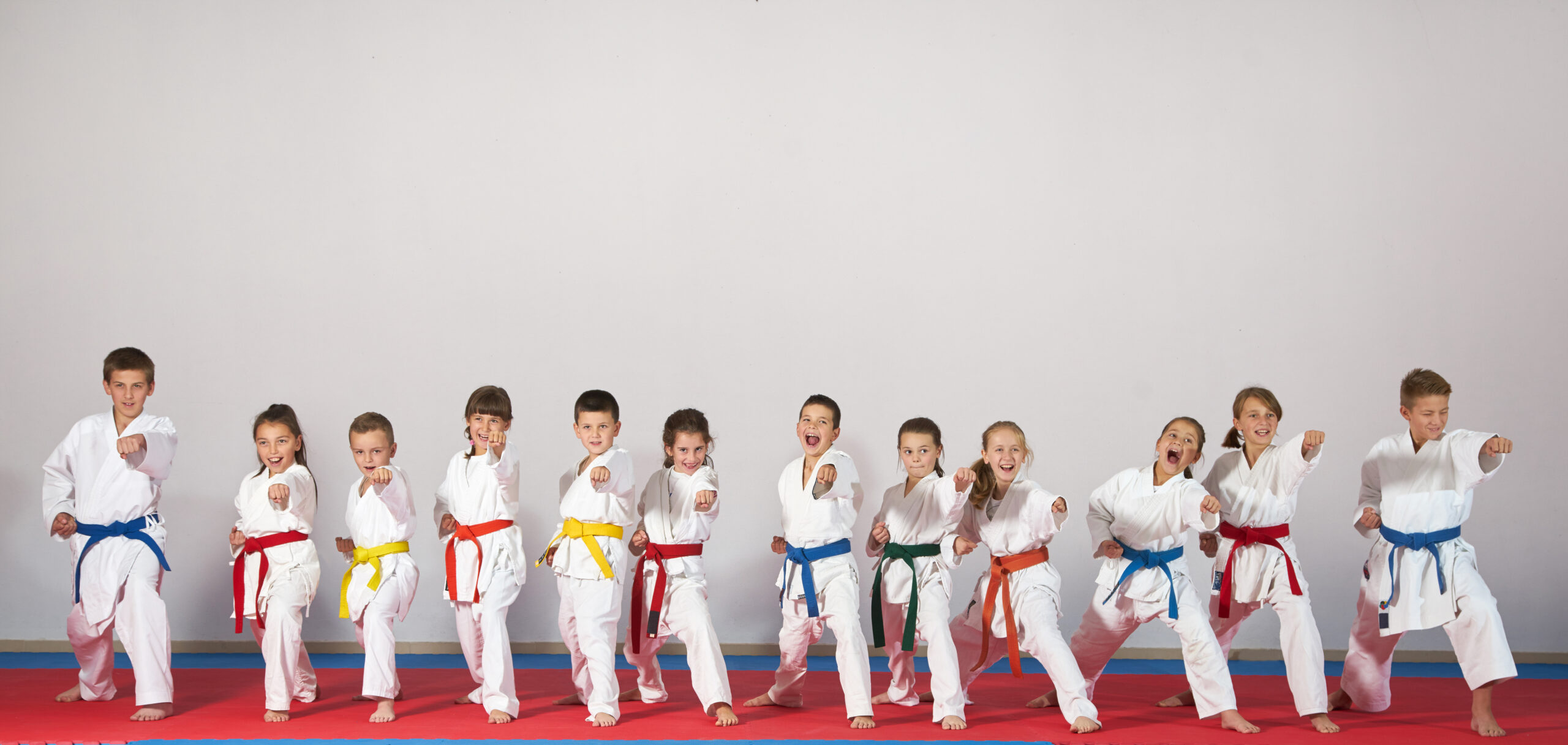
Karate builds discipline through repetition. Kids learn structured striking forms (kata), practice punches and blocks in patterned sequences, and progress through a well-defined belt system with regular testing. The structure and ceremony of karate classes appeal to many families, and the frequent belt tests give kids visible, frequent milestones.
Where karate is more limited: most class time is spent on forms and drills against the air, not live practice against a resisting partner. That means a child can be highly skilled at karate technique without ever having tested it under real pressure.
What taekwondo actually teaches
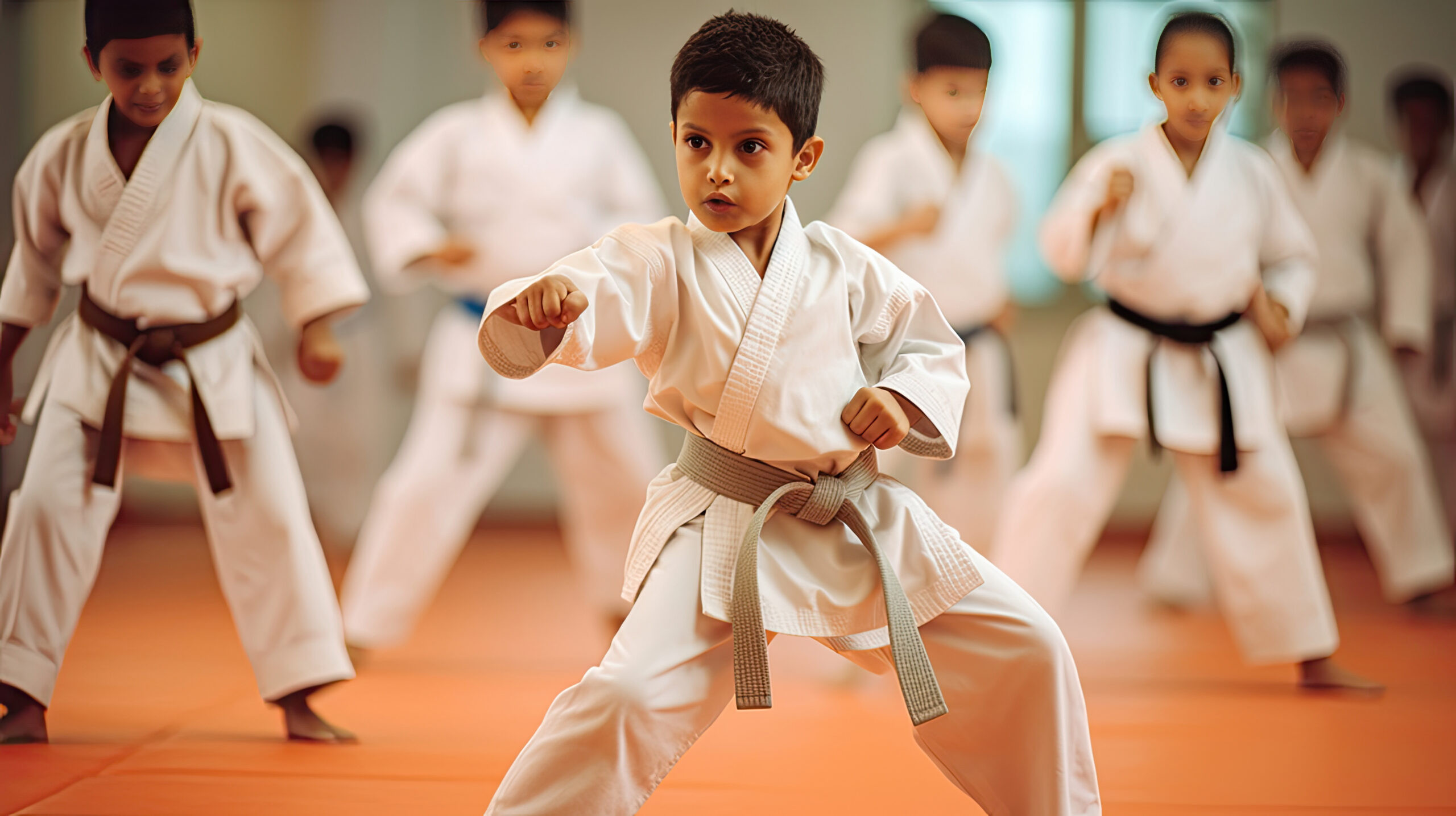
Taekwondo shares many of karate's strengths: structure, discipline, and a clear belt progression. Its signature is kicking, and it develops genuinely impressive flexibility, balance, and leg speed in kids who train consistently. Olympic-style point sparring adds a competitive, athletic dimension that many kids enjoy.
The same limitation applies here as with karate: taekwondo's point-sparring format rewards landing a clean strike and resetting, not controlling a real, ongoing confrontation. For situations like grabbing, clinching, or being taken to the ground, which is how most real kid-on-kid conflicts actually unfold, taekwondo's toolkit is narrower.
Why BJJ trains differently, and why that matters
The single biggest difference between BJJ and the other two: BJJ is trained live, against a resisting partner, from the very first classes, for kids and adults alike. Instead of practicing a technique against the air and hoping it works later, a student in BJJ tests every technique in real time, every class.
This matters most in exactly the scenario parents worry about: bullying. Most real confrontations between kids do not look like a karate or taekwondo sparring match. They involve grabbing, pushing, a clinch, or ending up on the ground, which is precisely the range BJJ is built around. A student who trains BJJ learns to stay calm and in control in that exact situation, without needing to throw a punch or kick at all.
From standing to control: how BJJ actually gets there
It helps to walk through what BJJ actually trains, step by step, because this is the part most comparisons skip. These fundamentals are taught across both our kids programs (GBK1–GBK3) and our adult and teen programs (GB1 and up):
Distance and safety first. Before anything else, students learn to read distance: how to stay safe outside striking range, and how to close that distance quickly and safely if a confrontation becomes unavoidable. This is the same principle wrestlers and judoka use to get past an opponent's strikes rather than trade blows with them.
Entries and takedowns. Once inside striking range, BJJ borrows heavily from Judo and wrestling to bring a confrontation to the ground safely and on the student's terms, using an opponent's own balance and momentum rather than overpowering them. This is trained as controlled entries and takedowns, appropriate to the student's age and experience level.
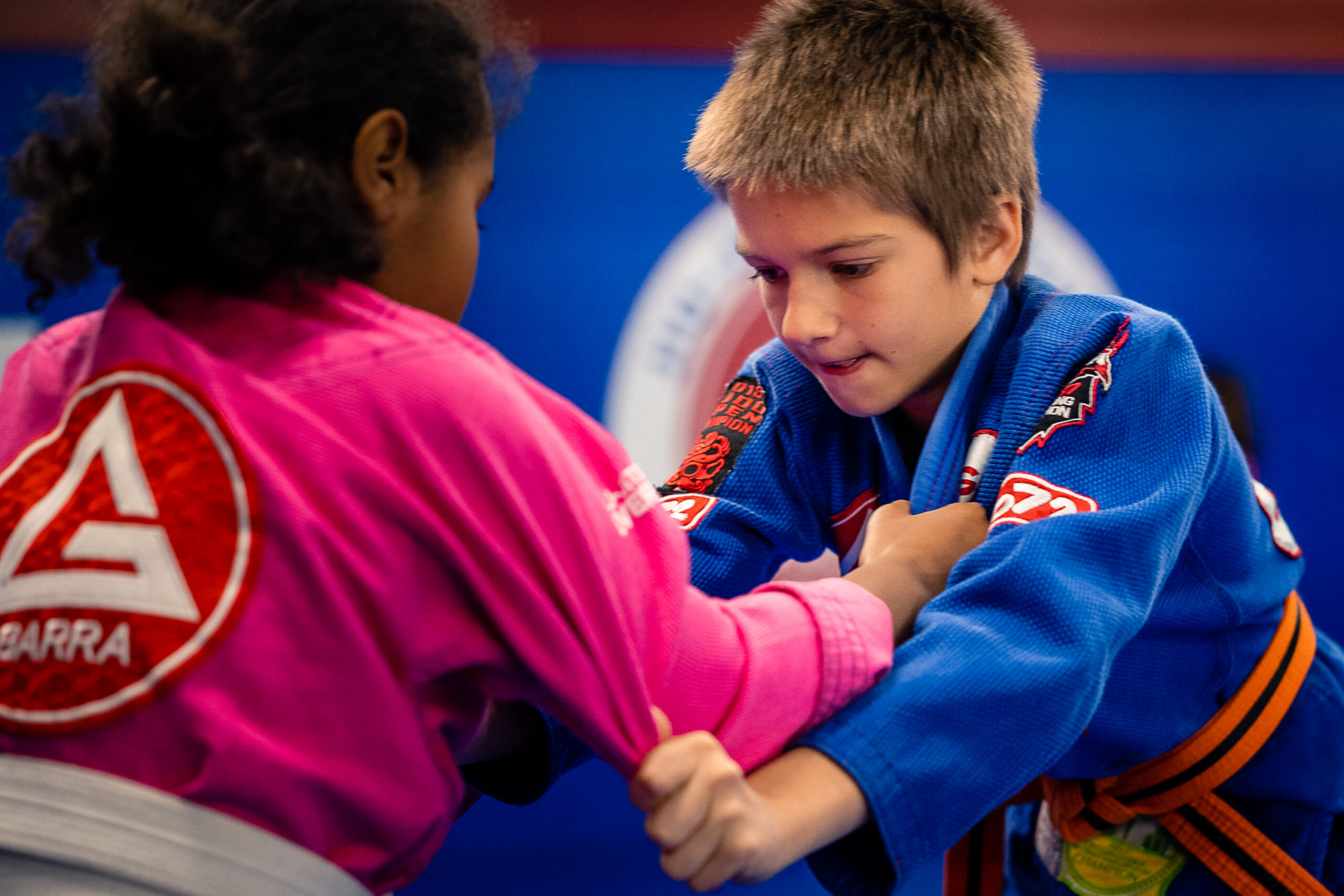
Control, not damage. Once on the ground, the goal in BJJ is never to strike or injure. It is to control: to neutralize the other person's ability to do anything, using position and leverage, until the situation is over or help arrives. This is the single biggest philosophical difference from striking arts, and it's why BJJ is often the first martial art recommended by parents, coaches, and even law enforcement trainers for real-world scenarios.
For kids specifically: avoid first, protect only if needed
Everything above applies broadly, but our kids program is not a scaled-down version of adult self-defense. It is built around a very different priority order, one that puts avoiding conflict entirely ahead of anything physical. At Gracie Barra Saint-Laurent, we teach kids a simple sequence, in this order:
The first and best option is always avoiding the situation altogether: walking away, staying near other kids or an adult, and recognizing a bad situation before it starts.
If avoidance isn't possible, kids are taught how to stay calm, keep space, and defuse a confrontation verbally rather than letting it escalate physically.
Only if a child truly cannot avoid or de-escalate a situation do we want them to have real, practiced tools, used to create space and get to safety, not to win a fight.
A common, very real scenario parents ask us about: a child is grabbed by the wrist, shirt, or backpack by another child. It's an unsettling thing to picture, but it's exactly the kind of moment BJJ prepares kids for calmly. Rather than panicking or freezing, a child who trains with us practices, in a safe and controlled setting, how to use leverage and body positioning to break free of a grip, create distance, and get to a trusted adult. The goal is never to fight back harder. It's to stay calm, get loose, and get safe.
What parents notice after switching to BJJ
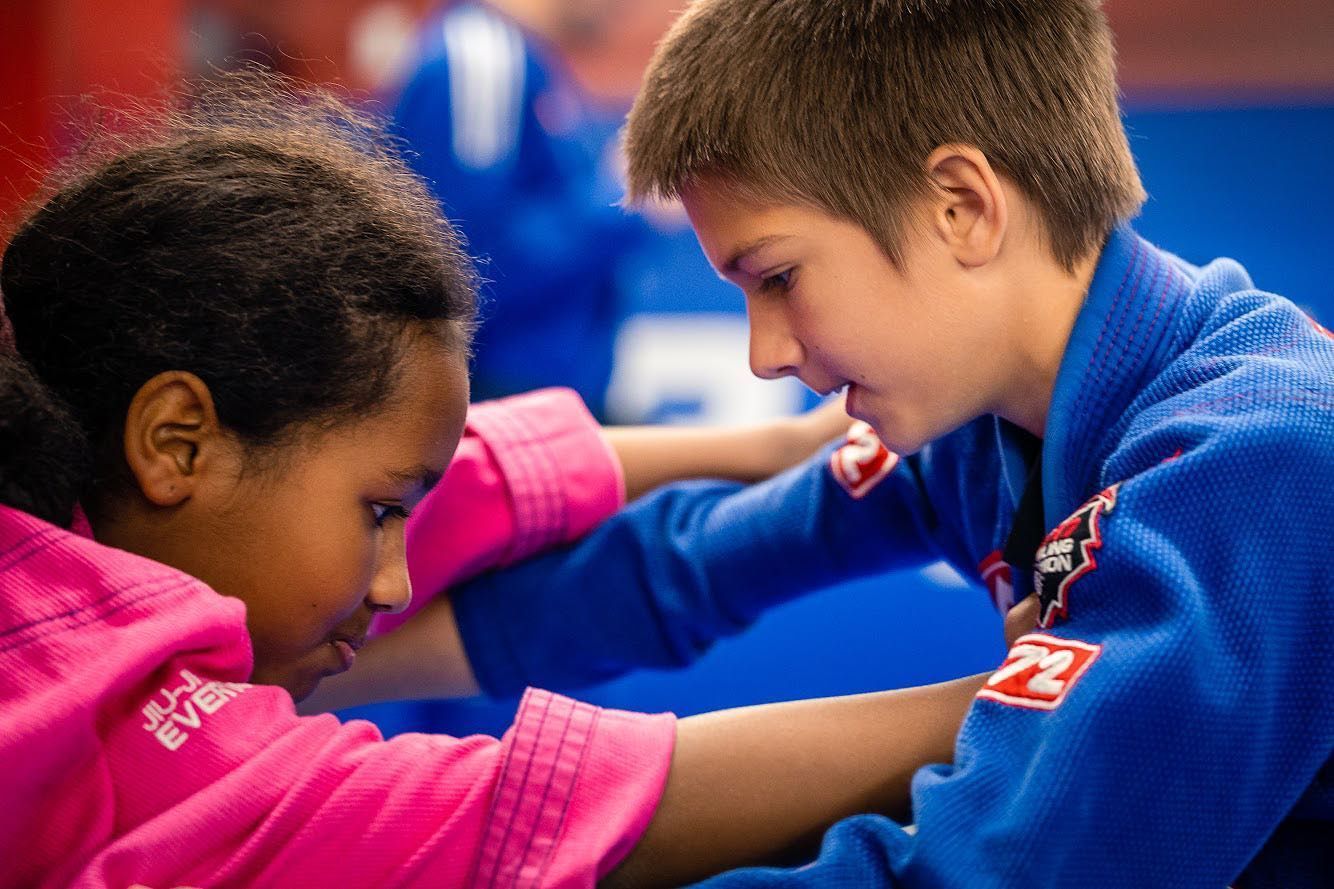
Kids learn to stay composed and in control in a clinch or on the ground, the exact position most real conflicts end up in.
Because technique is tested live every class, kids build confidence rooted in what they've actually proven works.
No striking means a lower-impact path to genuine self-defense skill, appealing to parents wary of contact sports.
Slower, more deliberate belt progression means each promotion reflects genuine development, not just testing readiness.
I've never wanted a child to leave here thinking they need to win a fight. I want them to know, in their bones, that if someone ever grabs them, they can stay calm, get free, and get to safety. That confidence changes how a kid walks through the world, long before they ever need to use it.
Prof. Demetrios Diavatopoulos, Head Instructor & Founder, Gracie Barra Saint-LaurentSee BJJ for yourself in Ville Saint-Laurent
Gracie Barra Saint-Laurent is located at 2167 Blvd. Marcel-Laurin in Ville Saint-Laurent, Montreal (H4R 1K4), serving families across Saint-Laurent, Ahuntsic, and Cartierville. Whether your child has already tried karate or taekwondo or is starting fresh, a free trial class is the easiest way to see the difference firsthand.
| Monday to Thursday | 5:30 PM to 9:30 PM |
| Friday | 12:00 PM to 1:00 PM |
| Saturday | 9:00 AM to 1:00 PM |
| Sunday | Closed |
Frequently asked questions
Which is better for kids: BJJ, karate, or taekwondo?
All three build discipline and fitness, but they differ in how they train self-defense. BJJ emphasizes live, resistant practice and ground control, which tends to translate more directly into real confrontations. Karate and taekwondo emphasize striking and forms, which build coordination and discipline but are trained live less often.
Is BJJ safer for kids than karate or taekwondo?
BJJ for kids is generally low-impact, since it focuses on controlled positional grappling rather than striking. Karate and taekwondo can involve light-contact sparring with kicks and punches. At Gracie Barra Saint-Laurent, kids programs are structured around drilling and controlled practice, not full-contact sparring.
Does karate or taekwondo help more with bullying than BJJ?
BJJ is often recommended specifically for bullying situations because most real confrontations between kids end up in a clinch or on the ground, not in a striking exchange. BJJ trains kids to control that exact scenario calmly, without needing to strike anyone.
Which martial art has the best belt progression for kids?
Karate and taekwondo typically have faster belt progression with more frequent testing, which can be motivating for some children. BJJ's kids belt system has more levels with a slower pace, which many parents find better matches long-term skill development over quick milestones.
Does BJJ involve real contact from the first class, unlike karate or taekwondo?
Yes. BJJ introduces live, resistant practice starting at white belt, scaled to be safe and age-appropriate. Many karate and taekwondo programs delay live sparring until a student reaches an upper belt, meaning students may drill technique for a long time before testing it against real resistance.
What does BJJ actually teach a child to do if they're grabbed?
Gracie Barra Saint-Laurent teaches kids a clear priority order: avoid the situation first, de-escalate verbally second, and only use physical technique as a last resort. If a child is grabbed by the wrist, shirt, or backpack, they practice calmly using leverage to break the grip, create space, and get to a trusted adult, not to win a fight.
Can my child try BJJ if they've already done karate or taekwondo?
Yes. Many students at Gracie Barra Saint-Laurent switch from striking-based martial arts to BJJ, and prior martial arts experience often helps with discipline and mat etiquette. A free trial class lets your child experience the difference firsthand.
Explore more at Gracie Barra Saint-Laurent
No experience needed. No gear required. Bring your child to a free trial class and see how BJJ trains real confidence.
Book Your Free Trial Class Or call us at 514-243-5455